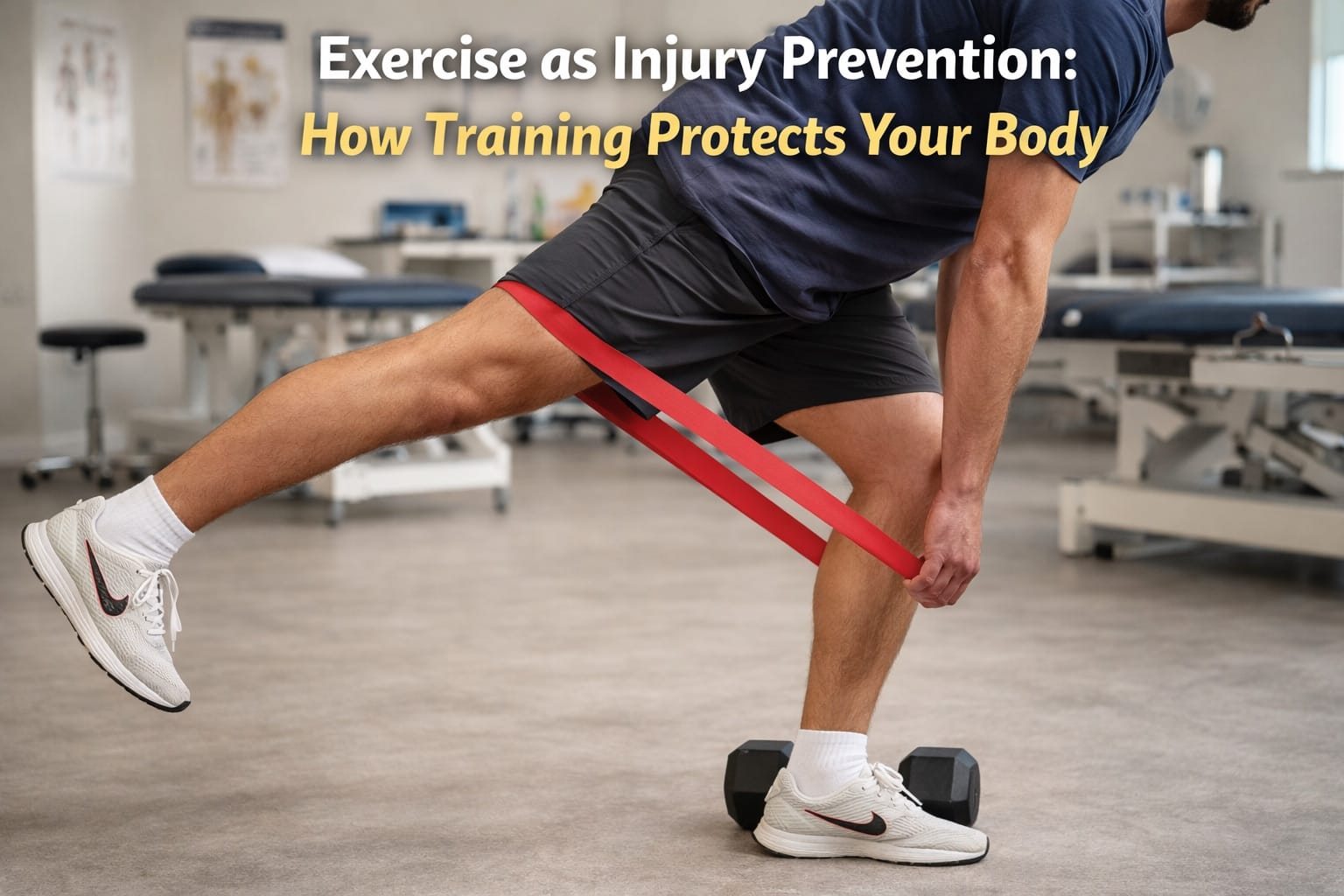
The Best Injury Prevention Is Training Itself
Athletes and active people often fear that training hard increases injury risk. The research shows the opposite: intelligent strength training is the single most effective intervention for preventing injuries.
What the Research Shows
A comprehensive 2014 systematic review examined 25 studies involving over 26,000 participants. Researchers compared different injury prevention strategies: stretching, proprioceptive training, strength training, and combinations.
The results were striking:
- Strength training: Reduced injuries by 68% on average
- Proprioceptive training: Reduced injuries by approximately 45%
- Stretching: No significant effect on injury rates
- Combined programs: Variable results depending on components
Strength training wasn't just slightly better; it was dramatically more effective than other approaches.
How Strength Training Prevents Injuries
Several mechanisms explain why stronger athletes get hurt less:
1. Tendon and Ligament Adaptation: Resistance training increases collagen synthesis and cross-linking in tendons and ligaments, making them stiffer and more resistant to strain. Stronger connective tissue can handle greater forces before failing.
2. Improved Force Absorption: Muscles act as shock absorbers. Stronger muscles can better absorb and dissipate forces that would otherwise damage joints and connective tissue.
3. Joint Stability: Muscles surrounding joints provide dynamic stability. Stronger muscles mean better joint control, especially during unexpected movements or perturbations.
4. Movement Quality: Strength training, especially under load, reinforces proper movement patterns. Athletes who train movement under resistance maintain better form when fatigued.
5. Fatigue Resistance: Injuries often occur when athletes are tired and form breaks down. Stronger athletes fatigue slower and maintain protective movement patterns longer.
Why Stretching Doesn't Prevent Injuries
This finding surprises many people. Stretching has been a warm-up staple for decades. But the research is clear: stretching before activity does not reduce injury rates.
The likely explanation: most injuries occur within normal ranges of motion, not at extreme end ranges. Being more flexible doesn't protect against the sudden, high-force events that cause most acute injuries.
This doesn't mean stretching is useless. It can improve range of motion for specific activities and may help with chronic pain. But for acute injury prevention, the evidence doesn't support it.
High-Risk Areas to Strengthen
Some body regions are particularly injury-prone. Target these in your prehab training:
Hamstrings: Hamstring strains are among the most common athletic injuries. Nordic curls have been shown to reduce hamstring injury rates by up to 51% in soccer players.
ACL (Knee): Strengthening the quadriceps and hamstrings, along with landing mechanics training, significantly reduces ACL tear risk, especially in female athletes.
Rotator Cuff: External rotation strengthening protects the shoulder during overhead movements. Essential for throwers, swimmers, and anyone doing overhead pressing.
Ankles: Proprioceptive training combined with calf and ankle strengthening reduces ankle sprain rates, particularly in sports with cutting and jumping.
Lower Back: Core strengthening (not just abs, but the entire trunk) protects the spine during lifting and athletic movements.
Practical Prehab Programming
Based on the research, here's how to structure injury prevention training:
Frequency: 2-3 sessions per week
Exercise selection:
- Nordic curls or Romanian deadlifts (hamstring protection)
- Single-leg exercises like Bulgarian split squats (knee stability)
- External rotation work for shoulders
- Balance and proprioceptive challenges
- Core anti-rotation and stability work
Loading: Progressive overload matters for injury prevention too. Light, easy exercises don't produce the tissue adaptations that protect against injury. Train with challenging loads (while maintaining form).
Timing: Can be done as part of warm-up (lower intensity) or as standalone training sessions (higher intensity).
The Dose-Response Relationship
The review found a dose-response relationship: more strength training generally meant fewer injuries. Each 10% increase in strength training volume was associated with a 4% additional reduction in injury risk.
However, there's a balance. Excessive training volume can itself become a risk factor for overuse injuries. The key is progressive, intelligent loading, not maximal loading at all times.
The Bottom Line
If you want to stay injury-free, the research is clear: strength train. Not stretching, not foam rolling, not special warm-ups. Progressive resistance training that builds stronger muscles, tendons, and ligaments is the most effective injury prevention strategy available.
The best part? The same training that prevents injuries also makes you stronger and more capable. It's not additional work; it's the foundation of a resilient, high-performing body.
Reference
Lauersen JB, Bertelsen DM, Andersen LB. The effectiveness of exercise interventions to prevent sports injuries: a systematic review and meta-analysis of randomised controlled trials. Br J Sports Med. 2014;48(11):871-877. PMID: 24100287