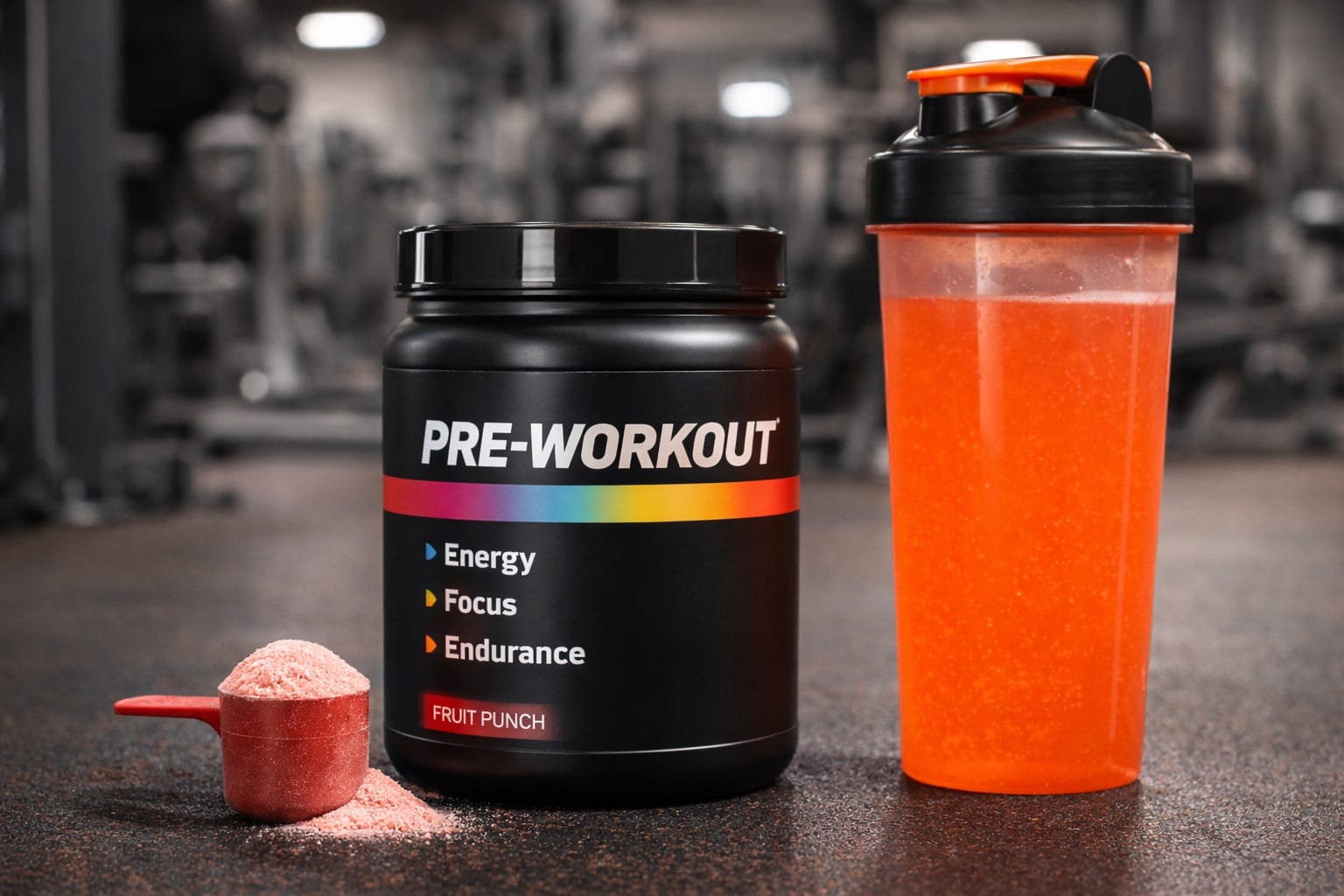
Walk into any gym and you'll see them: shaker bottles filled with neon-colored liquid, people downing mysterious powders before they touch a weight. Pre-workout supplements have become a multi-billion dollar industry, promising explosive energy, laser focus, and otherworldly pumps. But do they actually work? Are they worth the money? And do you really need them? Let's break down the science and the marketing.
What Are Pre-Workout Supplements?
Pre-workouts are supplements taken 20-45 minutes before training, designed to enhance performance. They typically come as powders mixed with water. The goal is some combination of:
- Increased energy and alertness
- Better focus and mind-muscle connection
- Improved endurance and delayed fatigue
- Enhanced blood flow and muscle pumps
- Greater strength output
Whether they deliver on these promises depends entirely on what's in them, and how much.
Ingredients That Actually Work
Not all pre-workout ingredients are created equal. Here are the ones with solid scientific backing:
Caffeine
What it does: Stimulates the central nervous system, increases alertness, reduces perceived effort, and may directly enhance muscle contractions.
Effective dose: 150-300mg (about 1-3 cups of coffee), taken 30-60 minutes before training.
The research: Caffeine is the most well-studied ergogenic (performance-enhancing) supplement. Studies consistently show 2-4% performance improvements in strength and endurance tasks.
The catch: Tolerance builds quickly. If you consume caffeine daily, you may need higher doses for the same effect, or periodic breaks to reset sensitivity.
Citrulline (or Citrulline Malate)
What it does: Converts to arginine in the body, which produces nitric oxide. This dilates blood vessels, improving blood flow and creating those muscle "pumps."
Effective dose: 6-8g of L-citrulline, or 8-10g of citrulline malate (which is citrulline bound to malic acid).
The research: Studies show improved endurance in higher-rep training and reduced muscle soreness. The pump effect is real, though more aesthetic than performance-enhancing.
The catch: Many pre-workouts severely underdose citrulline. If the label shows less than 6g, it's probably not doing much.
Beta-Alanine
What it does: Increases carnosine levels in muscles, which helps buffer lactic acid during high-intensity work. This can delay the burning sensation that forces you to stop.
Effective dose: 3.2-6.4g daily (doesn't need to be pre-workout; it accumulates in muscles over time).
The research: Most beneficial for activities lasting 1-4 minutes (think high-rep sets, circuits, or HIIT). Less useful for pure strength work with long rest periods.
The catch: Causes a harmless but weird tingling sensation (paresthesia) in many people. The tingle doesn't mean it's "working". That's just a nerve response.
Creatine
What it does: Increases phosphocreatine stores in muscles, allowing faster regeneration of ATP during high-intensity efforts. Improves strength, power, and muscle growth.
Effective dose: 3-5g daily (timing doesn't matter much).
The research: One of the most researched supplements in existence. Consistent evidence for strength and muscle gains across thousands of studies.
The catch: Creatine works through saturation, not acute dosing. Taking it pre-workout isn't special. Just take it consistently every day.
Ingredients That Are Questionable
Many pre-workout ingredients have less (or no) research support:
BCAAs (Branched-Chain Amino Acids)
Once hyped for muscle building, research now shows BCAAs are unnecessary if you eat enough protein. Your pre-workout protein shake or meal already provides them.
Arginine
The original "pump" ingredient, but it's poorly absorbed orally. Citrulline converts to arginine more efficiently, making straight arginine supplementation largely obsolete.
Taurine
Found in energy drinks, but evidence for exercise performance is weak. May have mild calming effects that offset caffeine jitters.
Various "Focus" Compounds
Ingredients like alpha-GPC, tyrosine, or huperzine-A may have some cognitive benefits, but evidence in exercise contexts is limited. The focus you feel is probably the caffeine.
Red Flags on Pre-Workout Labels
Watch out for these when shopping:
Proprietary Blends
When a label lists a "proprietary blend" with total weight but not individual ingredient amounts, they're hiding something, usually underdosed effective ingredients padded with cheap fillers.
Underdosed Key Ingredients
A pre-workout with 1g of citrulline might technically "contain" citrulline, but that's nowhere near an effective dose. Compare to research-backed amounts listed above.
Excessive Caffeine
Some pre-workouts contain 300-400mg of caffeine per serving. Combined with other stimulants, this can cause anxiety, rapid heart rate, and sleep problems. More isn't better.
Too Many Ingredients
Long ingredient lists often mean small amounts of everything. A focused product with adequate doses of proven ingredients beats a kitchen-sink formula.
Do You Actually Need Pre-Workout?
Here's the honest truth: for most people, pre-workouts are completely optional.
When Pre-Workout Might Help
- Early morning training: When you need to wake up fast and perform
- After a long day: When you're tired but committed to training
- High-rep or endurance work: Where fatigue buffering (beta-alanine) helps
- Occasional boost: For particularly important training sessions
When You Don't Need It
- You already drink coffee: A strong cup of coffee provides similar benefits
- You train at night: Caffeine can disrupt sleep for 6+ hours
- You're consistent without it: Don't fix what isn't broken
- You're on a budget: The money is better spent on quality food
The Psychological Trap
Pre-workouts can become a crutch. If you "can't train" without your powder, you've created a dependency. Some of the best athletes in the world train with nothing more than food and water.
Alternatives to Pre-Workout Supplements
Coffee
A strong cup of coffee (or espresso) 30-60 minutes before training provides caffeine without the additives. It's cheaper, more accessible, and has its own health benefits.
Proper Nutrition
A small meal 1-2 hours before training (carbs and protein) provides sustainable energy. Many "low energy" gym sessions are really just poor nutrition.
Quality Sleep
No supplement compensates for sleep deprivation. If you're relying on stimulants to train, the real issue might be your sleep habits.
Music and Mindset
A great playlist and focused mindset do more for workout quality than most supplements. The mental component of training is underrated.
How to Use Pre-Workouts Wisely
If you choose to use pre-workout supplements, here are smart practices:
Cycle Off Regularly
Take 1-2 weeks off every 6-8 weeks to reset caffeine tolerance. This keeps the product effective and prevents dependency.
Start with Half Doses
Assess your tolerance before taking a full scoop. Some products are very strong, and you can always take more next time.
Time It Right
Take pre-workout 20-45 minutes before training for peak effect. Don't take it too close to bedtime. Caffeine's half-life is 5-6 hours.
Read Labels Carefully
Choose products with transparent labels showing individual ingredient amounts. Compare to effective doses and avoid proprietary blends.
Don't Rely on It
Train without pre-workout regularly. Prove to yourself that you don't need it. Use it as an occasional tool, not a daily requirement.
The Bottom Line
Pre-workout supplements can provide a genuine performance boost, if they contain the right ingredients in adequate doses. Caffeine is the MVP. Citrulline, beta-alanine, and creatine offer additional benefits. Many other ingredients are marketing fluff.
But here's what matters more than any supplement: showing up consistently, training progressively, eating well, and sleeping enough. These fundamentals are responsible for 95% of your results. Pre-workouts are, at best, optimizing the remaining 5%.
If you enjoy pre-workout and it helps you train harder, use it. If you'd rather save money and drink coffee, that works too. Either way, focus on the things that actually move the needle.
Ready to focus on what really matters? Easy Reps helps you track your training progression, the real driver of results. Log your workouts, watch your strength climb, and build the consistency that beats any supplement. It's free, it's simple, and it works. Download it today.