The Recovery Industry
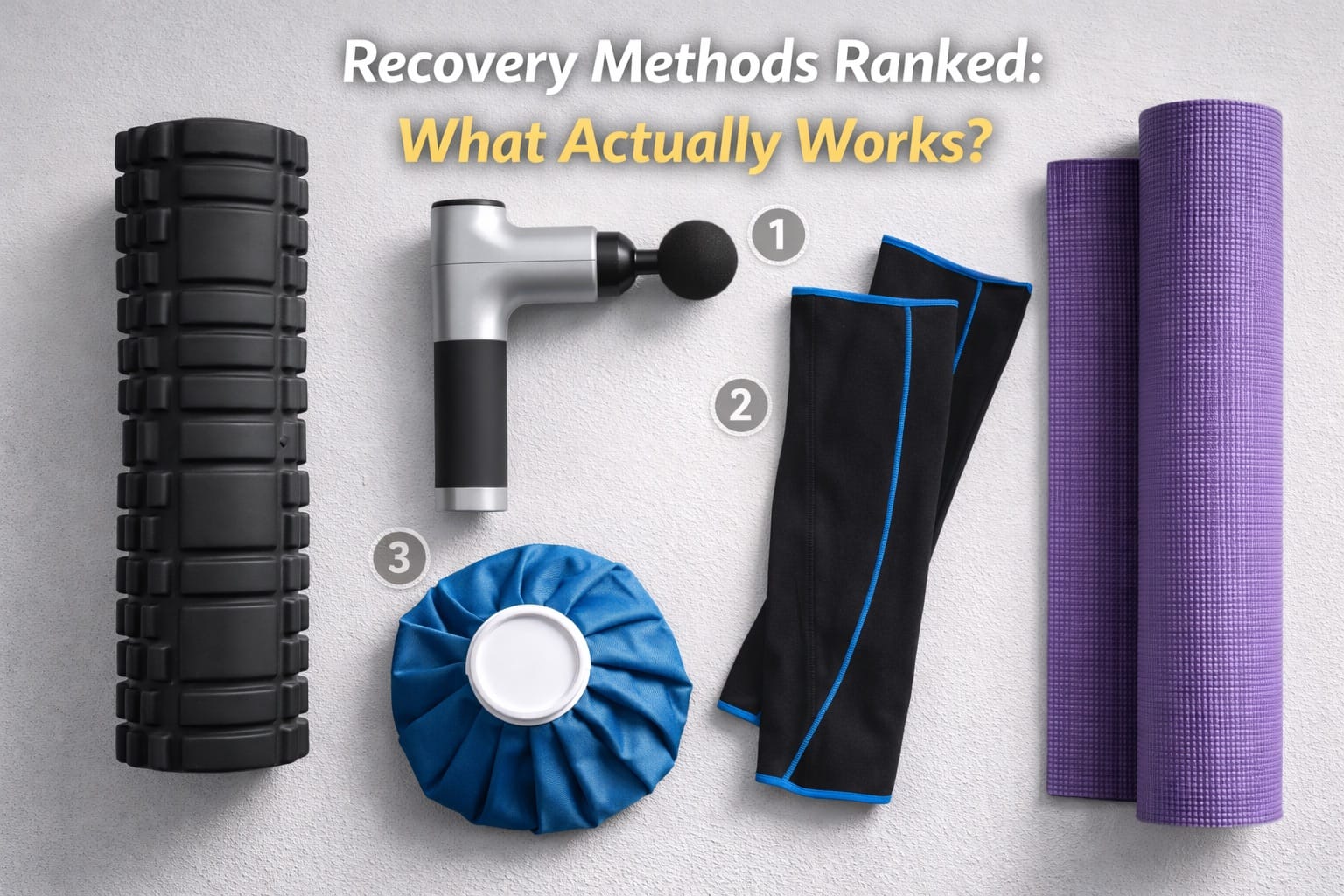
Recovery has become big business. Cryotherapy chambers, massage guns, compression boots, ice baths, foam rollers, the options are endless. Athletes spend thousands on recovery technology, but which methods actually work?
A comprehensive meta-analysis examined the evidence for various recovery techniques, helping separate what works from what's marketing hype.
The Study Approach
Researchers analyzed 99 studies examining recovery interventions after exercise. They measured two key outcomes:
- Perceived recovery: How recovered do athletes feel? (Reduced soreness, improved mood)
- Performance recovery: Are objective performance measures restored faster?
This distinction matters. Feeling recovered and being recovered aren't always the same thing.
The Rankings
1. Massage: Strong Evidence
Massage consistently showed the strongest effects on reducing delayed-onset muscle soreness (DOMS). Effects were significant at 24, 48, and 72 hours post-exercise.
Why it works: Massage increases blood flow, may reduce inflammation, and has significant psychological relaxation benefits. The human touch element may amplify perceived recovery.
Practical application: Post-workout massage or regular sports massage during heavy training phases. Self-massage with hands or tools can provide partial benefits.
2. Cold Water Immersion: Good Evidence
Ice baths (typically 10-15°C for 10-15 minutes) showed consistent benefits for perceived recovery and modest benefits for performance recovery.
Why it works: Cold reduces inflammation, decreases metabolic activity, and may reduce muscle damage. The shock of cold also has neurological effects that may affect pain perception.
Caution: Some research suggests excessive cold exposure may blunt training adaptations if used too frequently. Save ice baths for competition periods or when rapid recovery is essential.
3. Active Recovery: Moderate Evidence
Light activity (walking, easy cycling, swimming) after intense training showed modest benefits for recovery compared to complete rest.
Why it works: Light activity maintains blood flow without adding significant stress, potentially helping clear metabolic waste and deliver nutrients to damaged tissue.
Practical application: 20-30 minutes of easy movement the day after hard training. Keep intensity genuinely low (conversational pace).
4. Compression Garments: Moderate Evidence
Wearing compression clothing after exercise showed modest benefits for perceived recovery and small benefits for strength recovery.
Why it works: Compression may reduce swelling, support damaged tissue, and improve proprioception. Effects may be partly placebo.
Practical application: Easy to implement with minimal downside. Wear compression tights or sleeves after training if you find them comfortable.
5. Foam Rolling: Limited Evidence
Despite popularity, foam rolling showed inconsistent effects in the research. Some studies found benefits for range of motion and perceived soreness, others found no effect.
Why it might help: Mechanical pressure may reduce muscle tension and improve blood flow. The ritual itself may have psychological benefits.
Practical application: If you find foam rolling helpful, continue. Just don't expect dramatic recovery benefits.
6. Stretching: Weak Evidence
Static stretching post-exercise showed minimal effects on DOMS or performance recovery. This aligns with other research showing stretching doesn't prevent injury either.
Practical application: If you enjoy stretching for flexibility or relaxation, continue. Just don't expect it to accelerate recovery.
7. Whole-Body Cryotherapy: Weak Evidence
Despite the impressive technology (chambers at -110°C), whole-body cryotherapy showed weak and inconsistent effects. Cold water immersion actually performed better in comparisons.
Why the disappointment: Exposure time is very short (2-3 minutes) compared to ice baths (10-15 minutes). The body may not cool sufficiently despite extreme temperatures.
Practical application: Save your money. An ice bath is cheaper and may be more effective.
The Big Picture Finding
A crucial finding across all methods: effects on perceived recovery were generally larger than effects on objective performance measures.
In other words, most recovery techniques make you feel better more than they actually make you perform better. This doesn't mean they're useless. Feeling recovered affects motivation, training quality, and mental readiness. But don't expect any recovery method to dramatically accelerate actual tissue repair.
What Actually Drives Recovery
The fundamentals matter more than fancy techniques:
Sleep: 7-9 hours for general population, 8-10 for athletes. Nothing replaces sleep for recovery.
Nutrition: Adequate protein (1.6-2.2g/kg), sufficient calories, proper hydration.
Training load management: Progressive overload with appropriate deload weeks. You can't out-recover poor programming.
Time: Some recovery simply takes time. No intervention dramatically speeds up muscle repair.
A Practical Recovery Protocol
Based on the evidence, here's a sensible approach:
Essential (daily):
- 8+ hours of sleep
- Adequate protein intake
- Proper hydration
Recommended (regularly):
- Active recovery days with light movement
- Massage (weekly or bi-weekly during hard training)
Optional (when needed):
- Cold water immersion after particularly hard sessions or for rapid recovery between competitions
- Compression garments if you find them comfortable
- Foam rolling as part of your routine if you enjoy it
The Bottom Line
Massage and cold water immersion have the strongest evidence for enhancing recovery. Active recovery and compression garments offer modest benefits. Foam rolling, stretching, and whole-body cryotherapy have weaker or inconsistent evidence.
Most importantly, no recovery technique replaces the fundamentals: sleep, nutrition, and smart training. Nail those first, then consider adding recovery interventions as supplements rather than solutions.
Reference
Dupuy O, Douzi W, Theurot D, Bosquet L, Dugué B. An Evidence-Based Approach for Choosing Post-exercise Recovery Techniques to Reduce Markers of Muscle Damage, Soreness, Fatigue, and Inflammation: A Systematic Review With Meta-Analysis. Front Physiol. 2018;9:403. PMID: 29755363