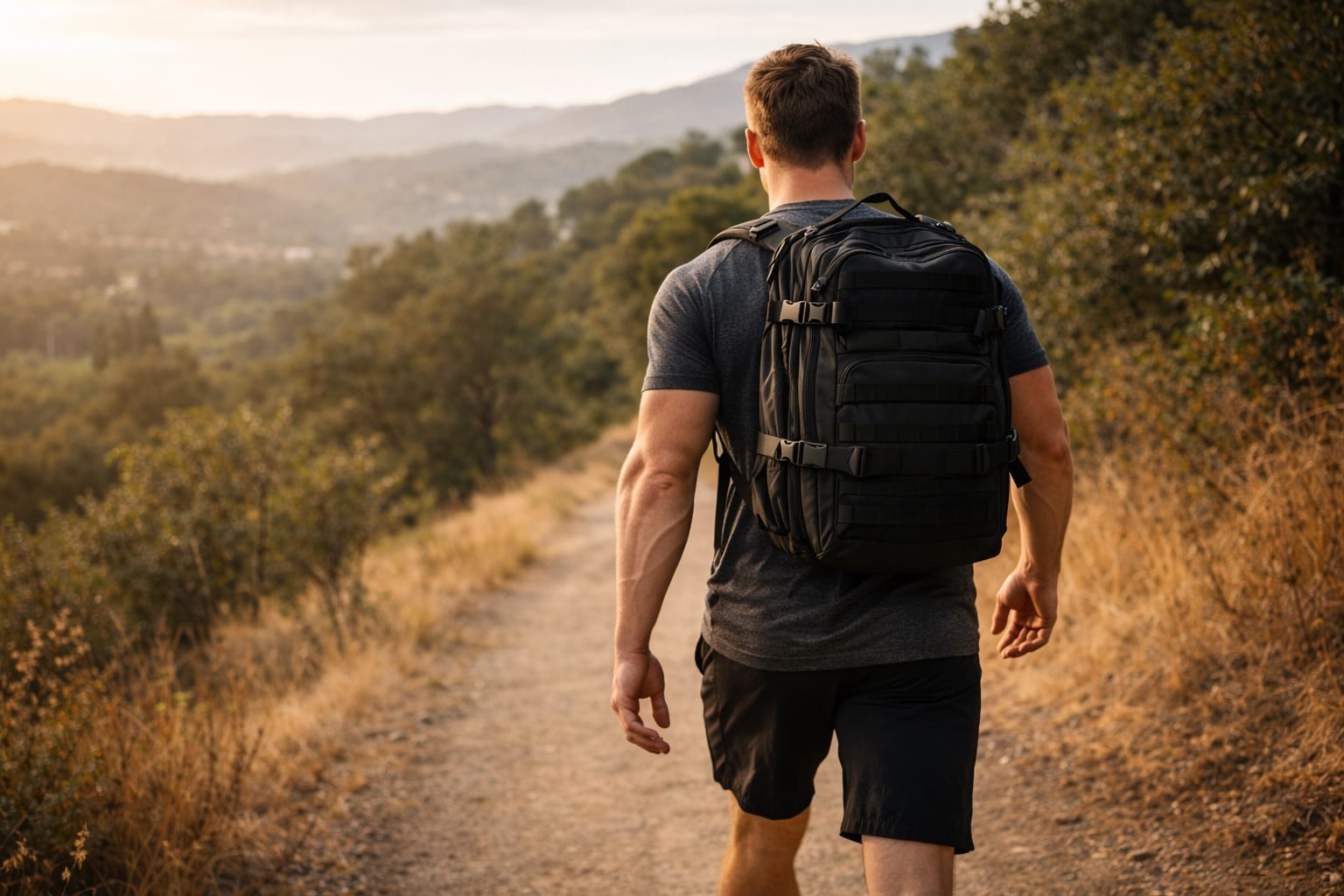
Walking is great. But what if you could triple the benefits without running, jumping, or high-impact movements? Enter rucking, the military-inspired fitness trend that's taking over in 2026.
Rucking is simply walking with a weighted backpack. It's been a cornerstone of military training for decades, and now civilians are discovering its remarkable benefits: massive calorie burn, strength building, and cardiovascular conditioning, all from something as simple as walking with weight on your back.
Why Rucking Works
Adding weight to walking transforms the activity in several ways:
Increased Caloric Expenditure
Studies show that carrying a load equal to 10-15% of your bodyweight increases caloric burn by 50-100%. Heavier loads (20-30%) can triple the calories burned compared to unloaded walking. A 30-minute ruck can burn what a 60-90 minute walk would.
Strength and Cardio Combined
Most exercise is either cardio or strength. Rucking is both. The weight challenges your legs, core, and back muscles while the sustained effort elevates your heart rate into the cardiovascular training zone.
Posture and Core Development
Carrying weight on your back forces you to engage your core and maintain upright posture. Over time, this strengthens the muscles that combat the "desk slouch" most people develop from sitting.
Low-Impact, High-Reward
Unlike running, rucking keeps one foot on the ground at all times, dramatically reducing joint stress. You get running-level calorie burn with walking-level impact.
Getting Started: Your First Ruck
Equipment
You don't need specialized gear to start:
- Any sturdy backpack: School backpacks, hiking packs, or even a messenger bag
- Weight: Books, water bottles, sandbags, or weight plates wrapped in a towel
- Comfortable shoes: Walking or hiking shoes with good support
As you progress, you may want a purpose-built rucking pack with padded straps and a hip belt, but this isn't necessary to start.
Weight Guidelines
- Beginners: 10-20 lbs (start here regardless of fitness level)
- Intermediate: 20-35 lbs
- Advanced: 35-50+ lbs
As a general rule, don't exceed 1/3 of your bodyweight. Quality of movement matters more than bragging rights.
Your First Week
Session 1: 15 lbs, 20 minutes at normal walking pace
Session 2: 15 lbs, 25 minutes
Session 3: 15 lbs, 30 minutes
Focus on maintaining good posture: shoulders back, core engaged, normal walking stride. If your form breaks down, reduce weight or duration.
Progressing Your Ruck
Follow this simple progression over weeks:
The 10% Rule
Increase either weight OR distance by no more than 10% per week. Never both simultaneously. This prevents overuse injuries and allows adaptation.
Sample 8-Week Progression
- Weeks 1-2: 15 lbs, 30 minutes, 3x/week
- Weeks 3-4: 20 lbs, 30 minutes, 3x/week
- Weeks 5-6: 20 lbs, 40 minutes, 3x/week
- Weeks 7-8: 25 lbs, 40 minutes, 3x/week
Rucking Workouts
The Standard Ruck
Pick a distance (2-5 miles), load your pack, and walk at a brisk but sustainable pace. Aim for 15-minute miles to start, faster than a stroll, slower than a race walk.
The Interval Ruck
- 5 minutes normal pace
- 2 minutes fast pace
- Repeat for 30-45 minutes
The Hill Ruck
Find a hill or set your treadmill to 5-10% incline. Walk uphill with weight for maximum leg and cardiovascular challenge. Start with shorter durations.
The Ruck + Bodyweight Combo
Every 10 minutes, stop and perform:
- 20 squats (with pack on)
- 10 push-ups (pack on back)
- 30-second plank
Continue rucking. This adds strength work while keeping heart rate elevated.
Form and Technique
Posture
- Stand tall. Imagine a string pulling you up from the crown of your head
- Shoulders back and down, not hunched forward
- Core engaged to support the spine
- Look forward, not down at your feet
Stride
- Normal walking stride. Don't overstride
- Land on your heel, roll through to toe
- Arms swing naturally
Pack Position
- Weight should sit high on your back, near shoulder blade level
- Tighten straps so the pack doesn't swing
- Use a hip belt if available to transfer weight to your pelvis
Benefits Beyond Fitness
Mental Toughness
Rucking is uncomfortable. Your shoulders burn, your legs fatigue, your lungs work hard. Pushing through this discomfort builds mental resilience that transfers to other areas of life.
Outdoor Time
Rucking encourages outdoor activity: parks, trails, neighborhoods. The combination of exercise and nature exposure compounds mental health benefits.
Social Activity
Unlike running, rucking allows conversation. It's an excellent activity to do with friends, partners, or ruck clubs that are popping up in many cities.
Functional Fitness
Carrying weight is practical. Groceries, luggage, children, moving boxes. Rucking prepares your body for real-world demands.
Common Mistakes to Avoid
Too Much, Too Soon
Start light. Your feet, shoulders, and back need time to adapt. Many beginners load up heavy and develop blisters, shoulder pain, or back strain.
Poor Footwear
Running shoes often lack the stability needed for rucking. Hiking boots or trail shoes with good arch support work better. Break in new shoes before long rucks.
Ignoring Discomfort
Some discomfort is normal. Sharp pain is not. If your lower back hurts, reduce weight. If you're developing blisters, address immediately. Listen to your body.
Forgetting Hydration
You'll sweat more than you expect. Bring water on any ruck over 30 minutes. For longer rucks, consider electrolytes.
Rucking vs. Other Cardio
| Activity | Calories/Hour | Strength Benefit | Joint Impact |
|---|---|---|---|
| Walking | 200-300 | Low | Very Low |
| Rucking | 400-600 | Moderate | Low |
| Running | 500-800 | Low | High |
| Cycling | 400-600 | Low-Moderate | Very Low |
Start Rucking This Week
You don't need to buy anything. Grab a backpack, fill it with books or water bottles totaling 15-20 lbs, and go for a 20-minute walk around your neighborhood. That's your first ruck.
If you like it (and most people do), you'll have discovered a powerful training tool that burns significant calories, builds functional strength, and provides the mental benefits of outdoor movement. Welcome to rucking.