The Most Underrated Performance Enhancer
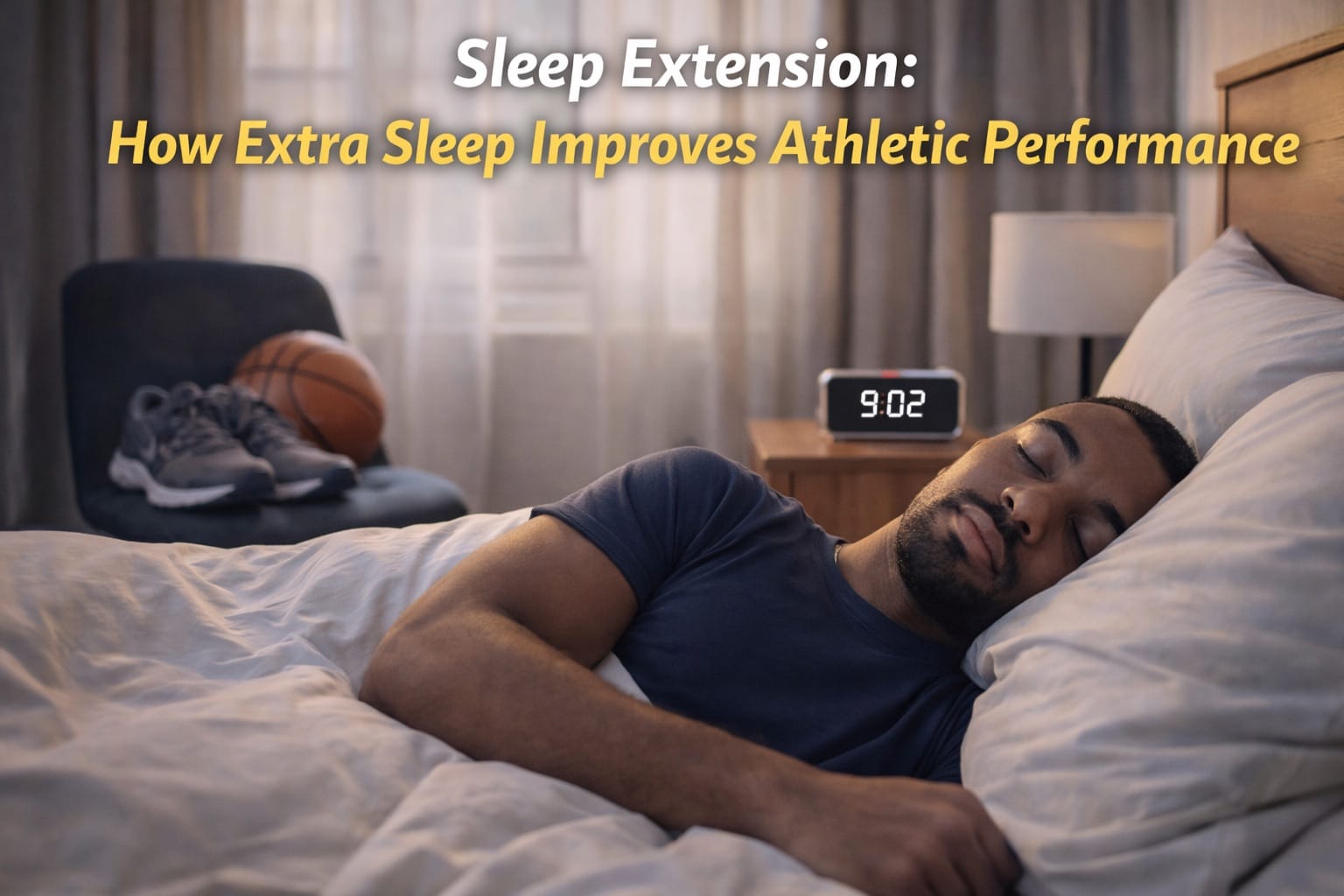
Athletes obsess over training programs, nutrition plans, and supplements. Yet many sleep 6-7 hours a night, leaving significant performance gains untapped. Research shows that simply sleeping more can produce dramatic improvements in speed, accuracy, and reaction time.
The Stanford Basketball Study
In a landmark study, researchers at Stanford took 11 basketball players and asked them to extend their sleep to a minimum of 10 hours in bed per night for 5-7 weeks. Before and after, they tested multiple performance metrics.
The players weren't sleep-deprived to begin with; they were getting the typical 6-9 hours that most people consider "normal." The intervention was simply: sleep more.
The Results Were Remarkable
Speed:
- 282-foot sprint time improved by 0.7 seconds (from 16.2s to 15.5s)
- This represents a 4.3% improvement from sleep alone
Accuracy:
- Free throw percentage increased by 9% (from 79.5% to 88.5%)
- Three-point percentage increased by 9.2% (from 68.7% to 77.9%)
Reaction time:
- Significantly faster reaction times
Subjective measures:
- Reduced fatigue
- Improved mood and vigor
- Greater alertness
These weren't marginal improvements. A 9% improvement in shooting accuracy could be the difference between winning and losing games.
Why Sleep Matters So Much
During sleep, your body and brain undergo critical processes:
Physical recovery: Growth hormone release peaks during deep sleep, driving muscle repair and growth. Tissue regeneration accelerates. Inflammatory processes are regulated.
Neural consolidation: Motor skills learned during the day are consolidated during sleep. The brain literally replays and strengthens movement patterns. This is why skill-based performance improves with sleep.
Cognitive function: Reaction time, decision-making, and focus all depend on adequate sleep. Even mild sleep deprivation impairs these functions significantly.
Hormonal balance: Sleep deprivation reduces testosterone and increases cortisol, an unfavorable hormonal environment for performance and recovery.
How Much Sleep Do Athletes Need?
Research suggests athletes need more sleep than sedentary individuals:
- General population: 7-9 hours
- Athletes: 8-10 hours, especially during heavy training
- Recovery periods: Even more during injury recovery or after competitions
Many elite athletes report sleeping 10-12 hours during intense training phases. LeBron James reportedly aims for 12 hours. Roger Federer has cited 11-12 hours as his target. These aren't lazy people; they're prioritizing recovery.
Signs You Need More Sleep
You might be under-sleeping if you experience:
- Needing an alarm to wake up
- Grogginess upon waking that takes hours to clear
- Afternoon energy crashes
- Irritability and mood swings
- Difficulty focusing during training
- Reduced motivation
- Stalled progress despite consistent training
- Increased illness frequency
Practical Strategies for More Sleep
Extending sleep isn't always easy. Here's how to make it happen:
1. Prioritize sleep like training: Schedule sleep. Put it in your calendar. It's not optional; it's part of your program.
2. Create a sleep-friendly environment: Dark room (blackout curtains), cool temperature (65-68°F), quiet or white noise, no screens in bed.
3. Consistent schedule: Go to bed and wake up at the same times daily, even on weekends. Irregular schedules impair sleep quality.
4. Limit evening caffeine: No caffeine within 6 hours of bedtime. That afternoon coffee at 3pm may be hurting your 10pm sleep.
5. Wind-down routine: Dim lights, reduce stimulation, and relax for 30-60 minutes before bed. Your brain needs transition time.
6. Naps: A 20-30 minute afternoon nap can supplement nighttime sleep without interfering with it (avoid naps after 3pm).
Sleep and Injury Risk
Beyond performance, sleep affects injury rates. Research on adolescent athletes found that those sleeping fewer than 8 hours nightly had 1.7x higher injury risk than those sleeping 8+ hours.
Sleep deprivation impairs:
- Reaction time (slower response to hazards)
- Coordination (increased movement errors)
- Decision-making (poor choices during competition)
- Tissue recovery (inadequate repair between sessions)
The Bottom Line
Sleep extension is one of the most powerful and underutilized performance interventions available. Research shows that simply sleeping more, aiming for 8-10 hours, can improve speed, accuracy, reaction time, and mood without any change to training.
If you're training hard but sleeping 6-7 hours, you're leaving gains on the table. The fastest path to better performance might not be another workout; it might be going to bed earlier.
Reference
Mah CD, Mah KE, Kezirian EJ, Dement WC. The effects of sleep extension on the athletic performance of collegiate basketball players. Sleep. 2011;34(7):943-950. PMID: 21731144