Tired of the same old crunches and planks? Your core is capable of far more than endless reps of basic exercises can develop. The abdominals, obliques, and deep stabilizers respond to variety, and some of the most effective core exercises are ones you've probably never tried.
This guide introduces unconventional core exercises that challenge your midsection in new ways. From the neuromuscularly clever Janda sit-up to the brutally simple side bridge, these movements will upgrade your core training and break through plateaus.
Why Unconventional Core Training Works
Standard core exercises become less effective over time. Your body adapts, and the same movements that once challenged you become easy. Introducing unconventional exercises:
- Creates new stimulus: Novel movements force adaptation
- Addresses weak points: Different angles reveal and fix imbalances
- Reduces hip flexor dominance: Many unique exercises isolate abs better
- Improves functional strength: Real-world movement requires core versatility
- Prevents boredom: Variety keeps training interesting
The Exercises
Janda Sit-Up
Named after Czech exercise physiologist Vladimir Janda, this sit-up variation uses a clever trick: activating your hamstrings to inhibit your hip flexors through a principle called reciprocal inhibition. The result? Your abs work harder in isolation.
How to perform:
- Lie on your back with knees bent at 90 degrees
- Have a partner hold your ankles, or hook your feet under something stable
- Before sitting up, actively pull your heels toward your glutes (without actually moving them)
- Maintain this hamstring tension as you perform the sit-up
- The hip flexor inhibition makes your abs work dramatically harder
Pro tip: You can use a resistance band looped around your ankles and a sturdy object to create the pulling resistance if you don't have a partner.
Sets and reps: 3 sets of 8-12 reps. If you can do more than 15, you're not engaging the hamstrings hard enough.
Frog Sit-Up
This variation changes your hip position to minimize hip flexor involvement, making it a true abdominal exercise.
How to perform:
- Lie on your back with the soles of your feet together
- Let your knees fall out to the sides in a "frog" position
- Cross your arms over your chest or place hands behind your head
- Sit up by curling your spine, lifting your torso toward your feet
- Lower with control
Why it works: The externally rotated hip position prevents the hip flexors from contributing significantly. Your abs have to do the work alone.
Sets and reps: 3-4 sets of 12-20 reps
Side Bridge (Side Plank)
A fundamental lateral core exercise that targets the obliques and quadratus lumborum, muscles often neglected in traditional ab training.
How to perform:
- Lie on your side with your elbow directly under your shoulder
- Stack your feet (or stagger them for easier balance)
- Lift your hips off the ground, creating a straight line from head to feet
- Hold this position without letting your hips sag or pike up
- Keep your top hand on your hip or extended toward the ceiling
Progressions:
- Beginner: Side bridge from knees
- Intermediate: Standard side bridge for time
- Advanced: Side bridge with leg lift, or add hip dips (lowering and raising hips)
Sets and reps: 3 sets of 20-45 seconds per side, or 3 sets of 10-15 hip dips
Otis Up
Named after the weightlifting movement, the Otis up combines a sit-up with an overhead press, challenging both trunk flexion and shoulder stability simultaneously.
How to perform:
- Lie on your back holding a weight (dumbbell, plate, or medicine ball) at your chest
- Perform a sit-up while simultaneously pressing the weight overhead
- At the top, your torso should be upright and arms fully extended
- Lower back down while bringing the weight back to your chest
Pro tip: Start light: even 10-15 pounds is challenging. Focus on smooth coordination between the sit-up and press.
Sets and reps: 3 sets of 10-15 reps
Cable Reverse Crunch
Adds resistance to the reverse crunch, challenging the lower abs more effectively than bodyweight versions.
How to perform:
- Attach an ankle strap to a low cable and secure it around your ankles
- Lie on your back with head toward the machine, holding something stable
- Curl your hips off the floor, bringing knees toward your chest against the cable resistance
- Lower with control, resisting the cable pulling your legs back
Sets and reps: 3 sets of 12-15 reps
Bent Knee Hip Raise
A lower ab-focused exercise that trains hip flexion through the abs rather than the hip flexors.
How to perform:
- Hang from a pull-up bar with arms straight
- Bend your knees to 90 degrees
- Curl your pelvis up, bringing your knees toward your chest
- Focus on the pelvic curl, not just lifting the legs. Your lower back should round
- Lower with control
Key cue: Think about bringing your pelvis toward your ribcage, not your knees toward your face.
Sets and reps: 3 sets of 10-15 reps
Pallof Press
An anti-rotation exercise that challenges your core to resist twisting, a crucial real-world function.
How to perform:
- Set a cable at chest height and stand perpendicular to the machine
- Hold the handle at your chest with both hands
- Step away to create tension on the cable
- Press the handle straight out in front of you
- Hold for 2-3 seconds, resisting the cable's pull to rotate you
- Return to chest and repeat
Sets and reps: 3 sets of 10-12 presses per side
Dead Bug
Teaches core stability while moving the limbs, exactly what happens in real movement and sport.
How to perform:
- Lie on your back with arms extended toward the ceiling and knees bent at 90 degrees
- Press your lower back into the floor. This is your stable position
- Slowly lower one arm overhead while extending the opposite leg
- Return to start and repeat on the other side
- Your lower back should not arch. If it does, reduce the range of motion
Sets and reps: 3 sets of 8-10 reps per side
Bird Dog
Similar concept to the dead bug but performed on all fours, challenging stability in a different position.
How to perform:
- Start on hands and knees, hands under shoulders, knees under hips
- Extend one arm forward while extending the opposite leg back
- Keep your hips and shoulders square. Don't rotate
- Hold briefly, then return and switch sides
Sets and reps: 3 sets of 10-12 reps per side
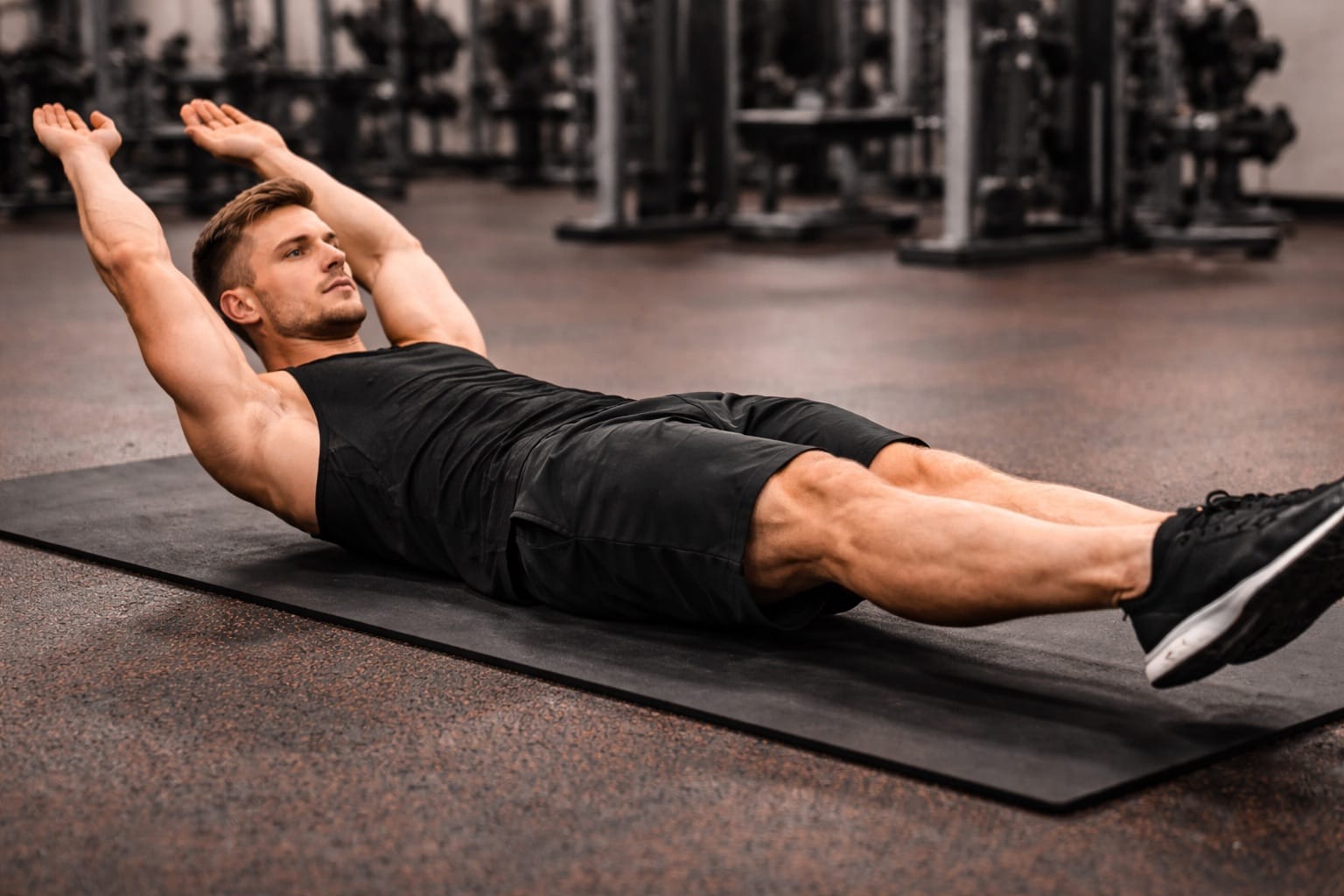
Hollow Body Hold
A gymnastics staple that creates full-body tension through the core.
How to perform:
- Lie on your back with arms overhead and legs straight
- Press your lower back into the floor
- Lift your legs and shoulders slightly off the ground
- Your body should form a slight "banana" or "hollow" shape
- Hold this position, maintaining constant tension
Progressions:
- Beginner: Arms at sides, knees bent
- Intermediate: Arms at sides, legs straight
- Advanced: Arms overhead, legs straight (full hollow)
Sets and reps: 3 sets of 20-45 seconds
Sample Unconventional Core Workouts
Workout 1: Hip Flexor-Free Ab Focus
- Frog Sit-Up: 3 sets x 15 reps
- Janda Sit-Up: 3 sets x 10 reps
- Hollow Body Hold: 3 sets x 30 seconds
Workout 2: Lateral and Rotational Core
- Pallof Press: 3 sets x 12 reps per side
- Side Bridge with Hip Dips: 3 sets x 10 per side
- Dead Bug: 3 sets x 10 per side
Workout 3: Complete Core Circuit
Perform as a circuit with minimal rest:
- Janda Sit-Up: 10 reps
- Side Bridge: 30 seconds per side
- Otis Up: 12 reps
- Dead Bug: 8 per side
- Hollow Body Hold: 30 seconds
Rest 60-90 seconds, repeat 2-3 rounds.
Workout 4: Advanced Core
- Bent Knee Hip Raise (hanging): 4 sets x 12 reps
- Janda Sit-Up: 3 sets x 10 reps
- Cable Reverse Crunch: 3 sets x 12 reps
- Pallof Press: 3 sets x 10 per side
- Hollow Body Hold (arms overhead): 3 sets x 45 seconds
Programming Tips
- Start slow: These exercises may be new movements. Focus on form before intensity
- Add variety gradually: Introduce 1-2 new exercises per training cycle
- Mix with basics: Unconventional exercises complement, not replace, standard training
- Train core 2-4x weekly: Can be done daily at lower intensity or 2-3 times at higher intensity
- Progress thoughtfully: Add reps, time, or resistance as exercises become easier
Track Your Core Progress
Core training often gets neglected because progress is hard to see. By logging your exercises (reps, hold times, and weights), you create accountability and can track improvements over time.
Even small progressions matter. Going from a 30-second side bridge to 45 seconds is meaningful progress. Document it and celebrate it.
Ready to upgrade your core training? Easy Reps lets you log every exercise, track your hold times, and monitor your progress. Download it free and build a stronger core starting today.