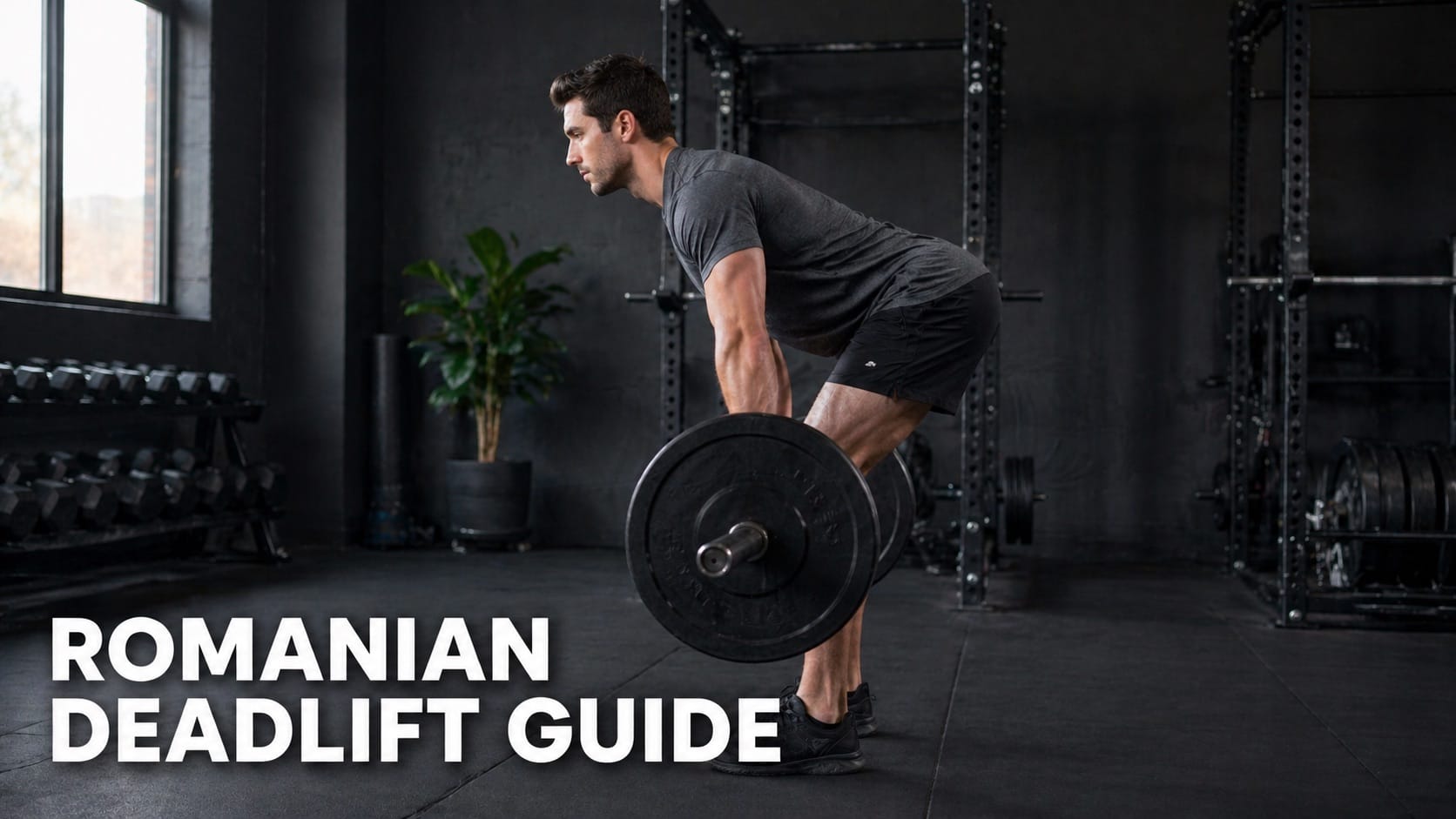
The RDL Is the Best Hamstring Builder You're Probably Skipping
If you've ever wondered why your hamstrings stay flat no matter how many leg curls you do, the answer is the Romanian deadlift. The RDL stretches and loads your hamstrings under heavy resistance, which is the recipe for muscle growth. It also hammers your glutes and trains the all-important hip hinge pattern. Whether you want stronger legs, a fuller backside, or better deadlift technique, the RDL deserves a spot in your routine.
What's the Difference From a Regular Deadlift?
The conventional deadlift starts from the floor and pulls up. The Romanian deadlift starts at the top and lowers down without touching the floor.
- Conventional: Concentric-focused. Bar starts on the floor every rep.
- Romanian: Eccentric-focused. Bar lowers to mid-shin, then comes back up.
The RDL keeps tension on your hamstrings the entire set. The conventional deadlift gives them a brief reset between reps. For pure hypertrophy, the RDL wins.
The Setup
Start with the bar in a rack at hip level, or pull it from the floor and stand up first.
- Stance: Feet hip-width apart, toes pointed straight forward
- Grip: Shoulder-width, overhand or mixed grip
- Posture: Stand tall, chest up, shoulders pulled back
- Knees: Soft bend, locked at this angle for the entire set (don't let them flex more on the way down)
The Hip Hinge: The Movement That Matters
The RDL is a hip hinge, not a squat. This is the single most important distinction.
- Take a big breath and brace your core
- Push your hips straight back as if you're closing a car door with your butt
- Let your torso lean forward to counterbalance the hip movement
- The bar travels straight down, sliding along your thighs
- Stop when you feel a strong stretch in your hamstrings — usually around mid-shin
- Reverse the motion by driving your hips forward, not by standing up with your back
Cue: hips back, then up. Not down, then up.
How Far Should You Lower the Bar?
The answer depends on your hamstring flexibility, not on the floor. Lower the bar until you feel a strong stretch in your hamstrings while keeping your back flat. For most people, that's somewhere between mid-shin and just below the knee.
Going lower with a rounded back doesn't build more hamstring — it builds back pain. Stop at the limit of your hip mobility.
Common RDL Mistakes
- Squatting instead of hinging: Your knees bend more on the way down, making it look like a squat-deadlift hybrid. Lock your knee angle.
- Bar drifting away from your body: Massively increases lower back load. Keep the bar dragging your thighs.
- Rounding your lower back: Means you've gone past your mobility limit. Stop higher.
- Hyperextending at the top: Lean back at lockout = stressed lumbar spine. Stand tall, then stop.
- Going too heavy too soon: The RDL teaches the hinge. Master it light before piling on plates.
RDL Variations
1. Dumbbell RDL
Hold a dumbbell in each hand. Same hinge pattern. Easier to learn because the dumbbells naturally fall close to your legs.
2. Single-Leg RDL
One foot off the floor, hinge with one leg working. Builds balance, glute strength, and addresses left-right imbalances.
3. Stiff-Leg Deadlift (close cousin)
Similar to the RDL but starts from the floor. Same hinge mechanics, with a brief floor reset between reps.
4. Trap Bar RDL
Performed with a hex/trap bar. Hands at your sides instead of in front. Easier on the lower back.
How to Program RDLs
The RDL works best as an accessory or secondary lift, not your main strength move.
- 3-4 sets of 8-12 reps
- 1-2 times per week
- Start lighter than you think — 50-60% of your conventional deadlift
- Focus on a 3-second descent. Time under stretch is where hamstrings grow.
RDLs leave your hamstrings sore for days. Don't pair them with heavy squats the next day. Track every session — small progress here adds up to big posterior chain gains.
Why RDLs Make Your Other Lifts Better
Strong hamstrings transfer everywhere.
- Bigger conventional deadlift (stronger lockout)
- Better squat depth (less butt wink)
- Reduced lower back strain
- Faster sprints and more explosive jumps
- Better posture and reduced injury risk
Hamstrings, Glutes, and the Hinge Pattern
Most people have weak posterior chains because they sit all day. Their hip flexors are tight, glutes are dormant, and hamstrings are underused. The RDL is one of the best correctives. It teaches your body to use the back of your legs the way it's supposed to.
Track Every RDL
Hamstring progress is slow and easy to miss without a log. Tracking weight, sets, and reps reveals whether your RDL is climbing or stalling. Easy Reps lets you log every set in seconds, so you can focus on the lift, not the math. Add the RDL to your routine, log your sessions, and watch your posterior chain transform. 💪